Public Discourse: How Debate Shapes Society
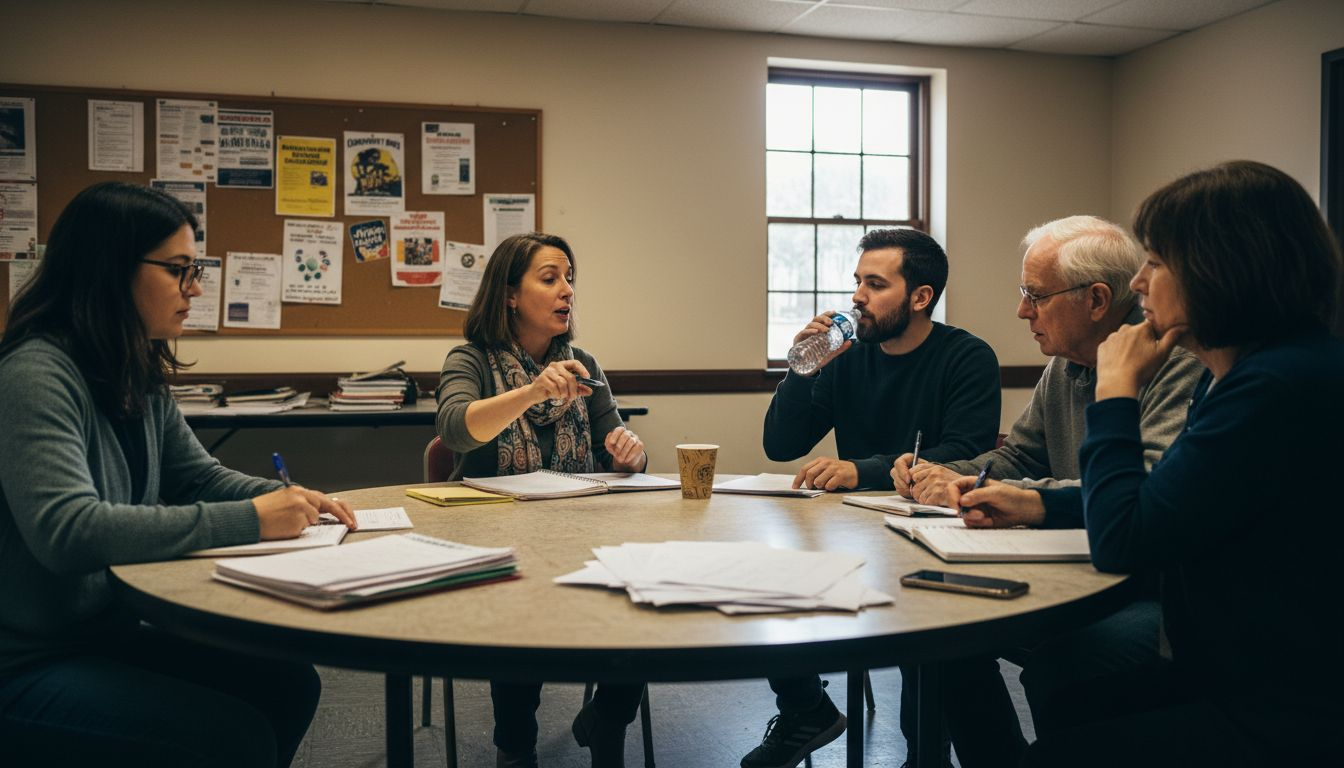
Most advice about american public discourse overlooks how vital these conversations have become for shaping democracy worldwide. In today’s fast-changing society, where information zips from one continent to another in seconds, the ability to engage in meaningful, structured debate sets the tone for cultural understanding. With more than 70 percent of adults believing that deeply polarized dialogue threatens social cohesion, understanding the core purpose and evolution of public discourse is crucial for anyone who cares about the future of civic life.
Table of Contents
Key Takeaways
Point | Details |
Importance of Public Discourse | Public discourse fosters critical exchanges of ideas, enabling democratic participation and societal progress. |
Transformative Channels | Diverse channels of public discourse, like social media and community meetings, allow for enhanced engagement and knowledge sharing. |
Risks of Polarization | Political polarization and misinformation threaten social cohesion, reinforcing divisions and complicating efforts for collective understanding. |
Need for Media Literacy | Developing media literacy and seeking diverse viewpoints can mitigate misinformation and encourage empathetic dialogue among differing perspectives. |
Core Definition and Social Importance
Public discourse represents the structured, critical exchange of ideas occurring within open social platforms that enable democratic participation. At its core, this concept transcends simple conversation, functioning as a vital mechanism for collective understanding and societal progress. Civil discourse enables democratic engagement by creating spaces where citizens can thoughtfully explore complex social challenges.
The fundamental purpose of public discourse extends far beyond casual dialogue. It serves as a sophisticated mechanism for social learning, where diverse perspectives interact, challenge assumptions, and generate nuanced understanding of critical issues. Critical exchanges foster democratic participation by encouraging citizens to engage actively with political, cultural, and social dynamics rather than remaining passive observers.
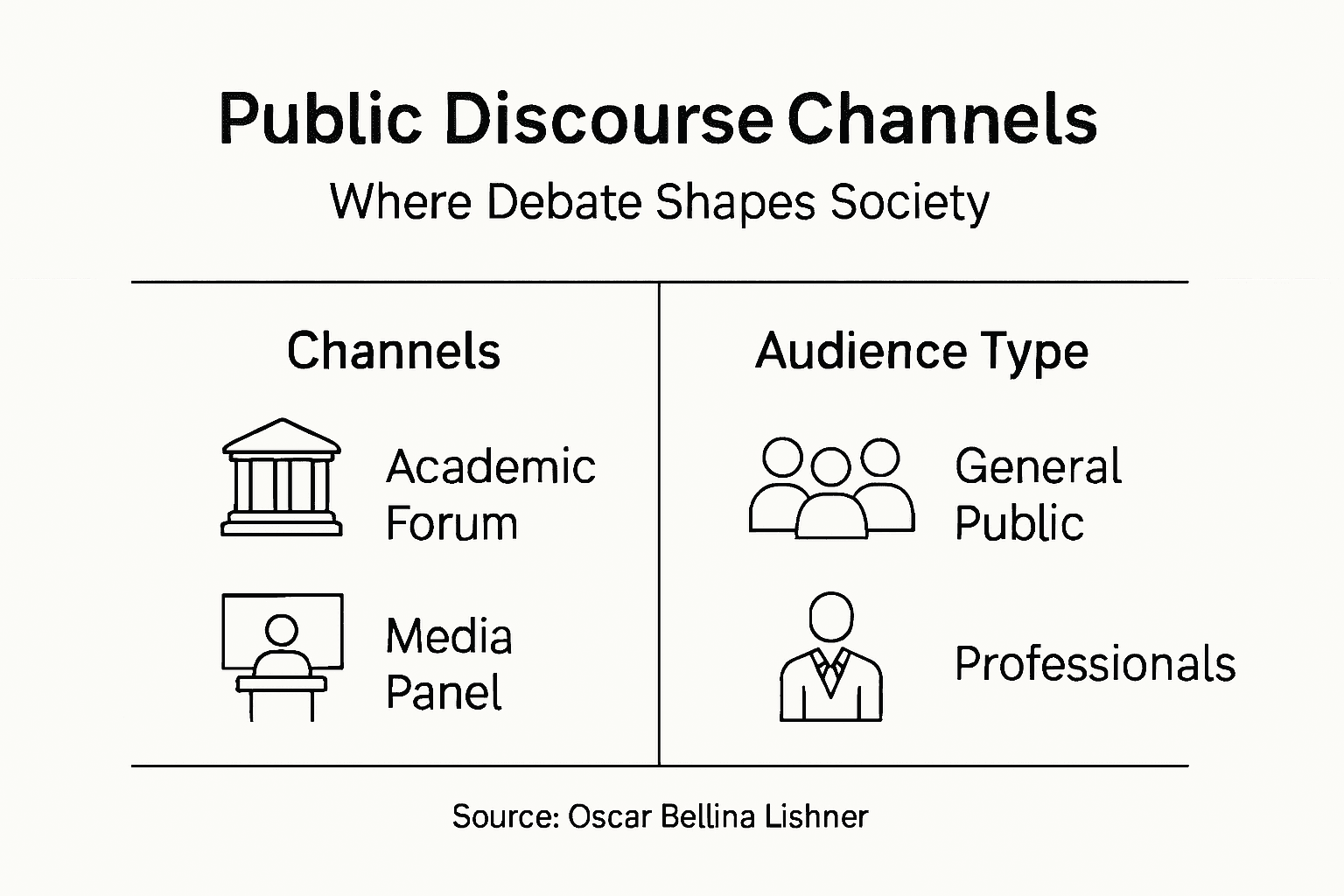
Public discourse operates through multiple channels: academic conferences, media discussions, online forums, community meetings, and political debates. These platforms share a common objective of promoting respectful, substantive dialogue that moves beyond surface-level disagreements. By creating structured environments for intellectual exchange, societies can transform potential conflicts into opportunities for mutual understanding and collaborative problem-solving.
Here’s a summary comparing major channels of public discourse and their primary impacts:
Channel | Key Audience | Typical Impact | Potential Challenges |
Academic Conferences | Scholars, experts | Generates knowledge, research | Limited public access |
Media Discussions | General public | Shapes public opinion | Bias, sensationalism |
Online Forums | Global community | Enables rapid idea exchange | Misinformation, echo chambers |
Community Meetings | Local citizens | Strengthens local engagement | Participation barriers |
Political Debates | Voters, officials | Influences policies | Polarization, manipulation |
Pro tip: Practice active listening during discussions by summarizing others’ perspectives before presenting your own viewpoint, which demonstrates respect and encourages more meaningful dialogue.
Forms of Public Discourse Today
Public discourse has dramatically transformed in the digital age, expanding far beyond traditional communication platforms. Contemporary discourse encompasses multiple formats that range from academic conferences to social media interactions, each serving unique communicative objectives. These forms enable individuals and groups to exchange ideas, challenge perspectives, and collectively construct social understanding across geographic and cultural boundaries.
Political discourse represents one of the most complex and dynamic forms of public communication. Political communication spans diverse channels including televised debates, parliamentary discussions, investigative journalism, online forums, and grassroots social media movements. These platforms allow citizens to engage directly with political processes, challenge existing power structures, and participate in democratic dialogue beyond traditional representative mechanisms.
Digital technologies have fundamentally reshaped public discourse by democratizing information access and enabling instantaneous global communication. Social media platforms, podcasts, blogs, and interactive online forums have emerged as powerful spaces where individuals can share perspectives, challenge dominant narratives, and create collaborative knowledge networks. These digital channels have reduced traditional gatekeeping mechanisms, allowing marginalized voices to enter public conversations and challenge established narratives.

Pro tip: Diversify your information sources by intentionally seeking perspectives from different cultural, political, and demographic backgrounds to develop a more nuanced understanding of complex social issues.
Key Features and Practices in Debate
Structured argumentation defines effective public debate, transforming complex discussions into systematic exchanges of ideas. At its core, debate is not about winning, but about exploring perspectives, challenging assumptions, and developing deeper understanding through rigorous intellectual engagement. Successful debates require participants to move beyond personal opinions, grounding arguments in evidence, logical reasoning, and a genuine commitment to mutual understanding.
Academic and professional debates follow specific structural frameworks that ensure fair, productive dialogue. Debate formats include structured speaking roles with clearly defined time limits, allowing each participant equal opportunity to present arguments, provide evidence, and respond to counterpoints. These structured approaches prevent debates from descending into unproductive arguments by establishing ground rules that promote respect, critical thinking, and substantive discussion.
Effective debate practices emphasize several critical skills beyond mere argumentation. Participants must demonstrate active listening, empathy, and the ability to critically analyze opposing viewpoints. This requires intellectual humility - the willingness to acknowledge the potential validity of alternative perspectives and adjust one’s understanding based on compelling evidence. Successful debaters understand that the ultimate goal is not to defeat an opponent, but to collectively advance knowledge and understanding of complex issues.
Pro tip: Practice steelmanning - deliberately presenting your opponent’s argument in its strongest, most charitable form before offering your counterargument, which demonstrates intellectual integrity and deepens mutual understanding.
Legal, Ethical, and Media Frameworks
Legal frameworks protect media discourse integrity by establishing critical guidelines that balance freedom of expression with responsible communication. These complex systems create boundaries that prevent potential abuses while preserving the fundamental right to public dialogue. Ethical considerations demand that media platforms and individual communicators maintain standards of accuracy, fairness, and transparency, ensuring that public discourse remains a constructive mechanism for societal understanding.
Comprehensive media regulations address multiple challenges743400_EN.pdf) emerging from digital communication technologies. These frameworks must contend with issues such as media ownership concentration, misinformation proliferation, content moderation complexities, and the evolving role of social media platforms in democratic processes. Effective legal structures must remain adaptable, recognizing the dynamic nature of communication technologies while protecting fundamental human rights and promoting equitable information access.
The intersection of legal, ethical, and media frameworks requires continuous negotiation between protecting free speech and preventing potential harm. This delicate balance involves multiple stakeholders, including government regulators, media organizations, technology platforms, and civil society groups. Each entity plays a crucial role in maintaining the integrity of public discourse, developing standards that respect individual expression while preventing the spread of harmful, manipulative, or deliberately misleading information.
Pro tip: Develop media literacy skills by consistently cross-referencing information from multiple reputable sources and critically examining the context, potential biases, and underlying motivations behind media narratives.
Risks of Polarization and Misinformation
Political polarization fundamentally transforms information dynamics, creating dangerous feedback loops that amplify social divisions and undermine democratic discourse. Modern communication technologies have dramatically accelerated these processes, enabling rapid spread of incomplete or deliberately misleading narratives that exploit emotional triggers and cognitive biases. The result is an increasingly fragmented public sphere where individuals become trapped in echo chambers, reinforcing existing beliefs while actively rejecting contradictory information.
Misinformation discourse reveals complex societal challenges that extend far beyond simple fact-checking mechanisms. Social media platforms, algorithmic recommendation systems, and targeted content strategies systematically exploit psychological vulnerabilities, creating environments where sensationalism and emotional manipulation frequently triumph over nuanced, evidence-based understanding. These technological architectures incentivize conflict and division, transforming public discourse from a collaborative knowledge-building process into a competitive arena of competing narratives.
The intersection of polarization and misinformation represents a profound threat to social cohesion and democratic functioning. Psychological research demonstrates that individuals become increasingly resistant to alternative perspectives when their core beliefs are challenged, leading to further entrenchment and reduced capacity for empathetic dialogue. This phenomenon creates self-reinforcing cycles of misunderstanding, where disagreement becomes personal and ideological differences transform into fundamental identity conflicts that undermine collective problem-solving capabilities.
The following table distinguishes between misinformation and polarization risks in public discourse:
Risk Type | Main Drivers | Societal Effects | Mitigation Strategies |
Misinformation | Social media algorithms, bias | Distorts public understanding | Media literacy, fact-checking |
Polarization | Partisan media, group identity | Reduced empathy, social division | Exposure to varied viewpoints |
Pro tip: Cultivate intellectual humility by intentionally seeking out perspectives that challenge your existing beliefs, and approach different viewpoints with genuine curiosity and a commitment to understanding rather than defeating.
Elevate Your Understanding of Public Discourse and Debate Today
Engage deeply with the challenges of polarization, misinformation, and the vital role of structured argumentation in shaping society. This article highlights how public discourse is not just conversation but a critical platform for democratic participation and intellectual growth. If you want to experience insightful political commentary, explore diverse perspectives, and enhance your grasp on complex social issues, discover the thoughtful work of Oscar Bellina Lishner.

Visit Oscar Bellina Lishner’s website to access his collection of books, articles, and podcasts that bring nuanced debate and historical context to life. Don’t miss the opportunity to immerse yourself in content that challenges assumptions and promotes meaningful dialogue. Start exploring now at https://oscarbellinalishner.com and become part of a community dedicated to advancing knowledge and understanding through informed public discourse.
Frequently Asked Questions
What is public discourse?
Public discourse refers to the structured, critical exchange of ideas that occurs in open social platforms, facilitating democratic participation and societal progress.
How does public discourse influence democratic engagement?
Public discourse fosters democratic engagement by creating spaces for thoughtful exploration of complex social challenges, encouraging citizens to actively participate rather than remain passive observers.
What are some common channels of public discourse?
Common channels include academic conferences, media discussions, online forums, community meetings, and political debates, each promoting respectful and substantive dialogue.
How can individuals improve their skills in public discourse and debate?
Individuals can enhance their skills by practicing active listening, demonstrating empathy, and employing techniques like steelmanning, which involves presenting opposing arguments fairly and thoughtfully to foster mutual understanding.
Recommended

Comments